
Fundraising Tips and Ideas for a Successful Marathon Experience
September 10, 2025
Categories: Families, RUN FOR AUTISM


When I joined the RUN FOR AUTISM team for the 2023 Bank of America Chicago marathon, I did not expect to be able to raise nearly $4,000 in less than three weeks, exceeding my initial fundraising goal by $2,500. This was only made possible by sharing my fundraising page with friends and family members and sharing it on Instagram and other social media. I shared my why – my autistic son, and the resources that the Organization for Autism Research (OAR) provides to the greater autism community.
For many runners, the fundraising journey is just as important as the miles they put into training. Recently, in a RUN FOR AUTISM Facebook group, past and present runners shared their fundraising ideas. I wanted to summarize these recommendations for effective strategies to help others reach their fundraising goals and engage others in charitable missions.
The following are several practical and creative ideas to inspire your fundraising efforts, along with thoughts on a mindset shift that transforms the process from “asking for money” into “giving others the chance to do good.”
Shift the Mindset: Opportunity, Not Obligation
Before diving into specific fundraising ideas, it’s important to think through your perspective on fundraising. Many runners struggle with the idea of asking friends, family, or strangers for money. When I first started fundraising, I was nervous too. But, you’re not begging or burdening people. Instead, you’re offering them the opportunity to contribute to something meaningful. By donating, supporters become part of your marathon story and a part of the greater impact you are making. This mindset shift makes conversations and outreach more authentic and empowering. Also, spend some time on the OAR website to learn more about the organization, the materials and resources available, and the research and scholarships funded. This has helped me talk more specifically about how the materials and resources have impacted my life by helping my family and my son’s educators. I told friends and family about educator resources, including the “What’s up with Nick” booklet that I’d shared with my son’s teachers.
Ask Local Merchants for In-Kind Donations and Hold a Raffle
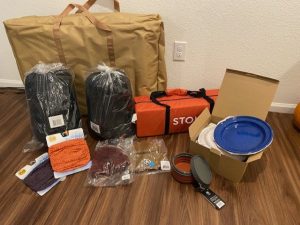
Local businesses can be fantastic allies in your fundraising journey. Instead of asking them for direct cash donations, approach them for in-kind gifts such as gift cards and merchandise. From these, you can organize a raffle. Sell tickets to your community, friends, and family, and draw winners for the donated prizes. Not only does this raise money, but it also gives local merchants positive visibility for supporting your cause. Everyone benefits: donors get a chance to win a cool prize, businesses receive recognition, and your fundraising total grows. I held a camping gear raffle filled with items that I knew a majority of my friends and family would be interested in owning. Each “entry” was a $50 donation to OAR, and I retroactively gave anyone who had already donated an entry based on their previous donation. While the gear wasn’t donated, it was heavily marked down from $600 to $275 from end-of-season sales. My raffle brought in $1750 in donations, and the raffle winners love their new camping gear!
Organize a 50/50 Raffle
If collecting in-kind donations feels like a challenge, a 50/50 raffle is a simpler alternative with no physical prizes needed. Participants buy tickets, and the winner receives half the money while the other half of the proceeds go directly to your fundraising campaign. Fundraising around the time of a big game? Use Superbowl Squares or a March Madness fundraiser to tap into people’s competitive edge while raising money.
Host a Bake Sale or Lemonade Stand
Everyone loves a sweet treat! My nieces and nephews did a bake sale in their front yard and raised $125 selling cookies. Involve friends, family, and kids who love baking, and consider adding creative touches, such as labeling items with marathon-themed names (“26.2-mile muffins” or “runner’s recovery brownies”). This not only raises money but also sparks conversations about your marathon journey. Bake sales are also an excellent opportunity to share OAR resources with community members who stop by. Create a QR code that links to OAR resources online, or request free copies of OAR resources to share!
Encourage Per-Mile Donations and Donor-led playlists
No matter what distance you’re running, you can use the distance for interactive fundraising. One idea is to encourage donors to contribute an amount per mile – encourage a $26.2 donation for a marathon, just $1 dollar per mile. Or, if you’re going to listen to music while racing, give your donors a chance to help pick your race-day soundtrack. A friend of mine did a “fill in the square” where everyone could pick a mile, donate that amount (i.e. mile 15= $15), and share a favorite song to listen to during that mile. On race day, you’ll be motivated by a soundtrack of songs handpicked by those who support you! This makes supporters feel personally involved while giving you a motivational boost when your aunt’s favorite hype song comes on at mile 20.
Utilize Matching Donations
Finally, maximize the impact of every contribution by pursuing matching donations. Some employers have official programs that match their employees’ charitable gifts, effectively doubling the amount raised. Ask your donors if their employers will match their donations. Often, donors will just need to submit a receipt to their company for the match to be processed. Even without formal programs, you can approach generous supporters to see if they’d be willing to match what others give. Promoting a “matching period” often motivates donors, since they know their contribution will be instantly multiplied.
Regardless, be sure to remind donors that every donation, whether big or small, makes a difference. Together, these donations allow OAR to fund new research studies, scholarships, and autism resources to improve quality of life for the autism community, today and in the future.
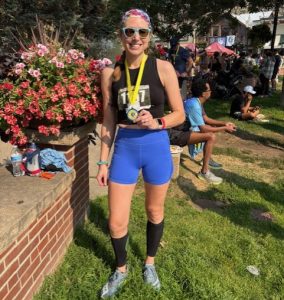
Jenelle Tittelfitz is a mother to a neurodivergent 9-year-old boy and a 5-year-old boy. She’s a wife, an advocate, and a Physician Assistant in the Denver area. In addition to running marathons to support the Organization for Autism Research, she is also part of a runner/rider duo with her son for the Team Hoyt Denver chapter.
Blue Envelope Program Supports Autistic Drivers
The Blue Envelope Program, an initiative designed to improve communication between autistic drivers and law enforcement officers, has been adopted...
Find Your Crowd: Building Real Friendships Through Authenticity
I have collected Pokémon cards since I was about five years old. It felt like the most natural thing in the...
Why Connection Matters for Autistic Children
“Do autistic children really want friendships?” As parents and practitioners, we may have asked ourselves this question. If a child...