


For many children, the start of a new school year is filled with excitement—fresh notebooks, new classmates, and the excitement of seeing their friends after a summer apart. For children with disabilities, this time can also bring anxiety, uncertainty, and worry about not having friends at school. Students with disabilities often face emotional and physical hurdles that are invisible to their peers. As the school bells ring once again, it’s crucial that we start the year off by teaching peer acceptance and building inclusive relationships among students.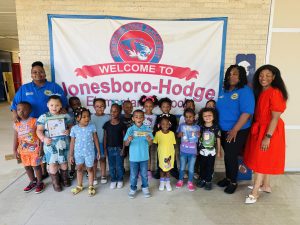
During the 2024-2025 school year, Jonesboro Hodge Elementary School, Jonesboro, Louisiana had the privilege of receiving an OAR Peer Education Grant. Through this grant and the efforts of staff and students at our school, we created an inclusive environment that supported the growth and development of all students. Research has shown that students with autism and other developmental disabilities often face challenges in understanding social cues, initiating and maintaining friendships, or adapting to classroom norms. As a result, they may act differently than the other students in the classroom, which can lead to social isolation, bullying, or mental health issues.
A lack of understanding about autism and other disabilities among neurotypical students is usually why they don’t easily accept students with disabilities as friends and classmates. Students are often segregated into separate classrooms, leaving limited opportunities for structured peer interaction. Oftentimes, neurotypical students misinterpret social skill differences as rude or inappropriate.
Through our efforts, we have learned that tackling these barriers requires deliberate, informed strategies that educate and empower students and staff and create a culture of empathy and inclusion. Our work during the 2024-2025 school year benefited all of our staff and students and created an environment conducive to understanding the diverse needs of others. The strategies we used included:
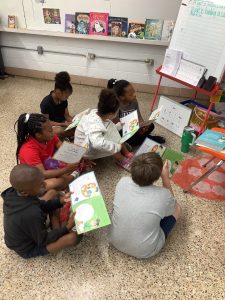
By fostering understanding, encouraging positive interactions, and embracing differences, schools can create inclusive environments where all students feel valued, respected, and supported. The ripple effects of acceptance extend far beyond the classroom by helping students learn to value similarities and celebrate differences.
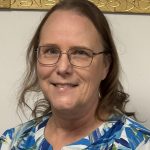 Bonnie Buckelew is the supervisor of special education in Jackson Parish, La. She holds a Bachelor of Science in Elementary Education and a Master of Education in Special Education from Northwestern State University. During her 37-year tenure, she has worked in a variety of educational settings.
 Danielle Copeland is the principal of Jonesboro-Hodge Elementary in Jonesboro, La. She earned a Bachelor of Science in Elementary Education, dual Special Education from Grambling State University, and a Master of Education in Educational Leadership from Louisiana State University. She strives to be an advocate for high expectations, equitable practices, and positive experiences for all students.
Blue Envelope Program Supports Autistic Drivers
The Blue Envelope Program, an initiative designed to improve communication between autistic drivers and law enforcement officers, has been adopted...
OAR Welcomes New Hire Autism Navigators
Along with the spring sunshine, OAR’s Hire Autism Program warmly welcomed seven new talented navigators. Congratulations to Jenine B., Cristian...
Social-Emotional Development and Communication for Young Children
In October 2025, OAR’s Board of Directors authorized funding for eight applied autism research grants. These new research grants, totaling...