
Helping Autistic People Have Better Healthcare Experiences
March 03, 2026
By: Jeanne Holverstott, MS, DHSc
Categories: Self-Advocates, Families, Message


A client once told me she avoids telling doctors she’s autistic.
“What’s the point?” she said. “Once I mention it, I turn into either a fascination or a fraud.”
Her words stayed with me. Many autistic adults describe the same pattern: when they share their diagnosis, the energy in the room shifts. Some providers become overly curious, turning the visit into an impromptu psychology lesson. Others become skeptical, questioning the diagnosis or treating unrelated symptoms as “just part of autism.”
For many autistic people, sharing their diagnosis doesn’t automatically make care better.
Sometimes, it makes things harder.
We often hear that self-advocacy and openness are keys to getting individualized care. In theory, that’s true. In practice, disclosure only works if the system knows what to do with that information.
When providers lack autism training, disclosure can lead to misunderstanding or stigma instead of support. When providers are autism-informed, that same disclosure can open doors to empathy, collaboration, and more personalized care.
So the real question isn’t just, “Will a patient disclose?” It’s also, “Has the system earned their trust?”
Disclosure doesn’t happen in a vacuum. It’s not a one-time decision—it’s a relationship outcome. Most autistic people share personal information only when they feel psychologically safe: when they believe what they say will be heard, respected, and used to help them.
When disclosure feels unsafe or pointless, silence isn’t a failure of communication—it’s a form of self-protection. It’s a way of saying, “You haven’t shown me it’s safe to be honest yet.”
In that sense, disclosure is not just a patient decision; it’s also a provider achievement.
Providers can create the conditions that make sharing easier. The same approaches that make healthcare more autism-friendly also make disclosure more likely. Here are the key ingredients:
If a patient isn’t disclosing, it might be a signal that one or more of these conditions hasn’t yet been met.
While providers have the biggest role in improving care, families, educators, and autistic self-advocates can make a real difference by helping prepare and structure the healthcare experience.
Even small steps like these can help shift the dynamic toward partnership and predictability.
Cultural competence in autism care isn’t about memorizing traits or stereotypes. It’s about recognizing that autistic people have their own cultural patterns—ways of processing, communicating, and connecting that may differ from the majority but are no less valid.
Being autism-competent means being curious rather than corrective. It means listening for meaning even when expression looks different. It means understanding that eye contact, tone, or pacing aren’t measures of sincerity or understanding. They’re just communication styles.
For many autistic people, being understood feels like the exception, not the expectation. True competence starts when healthcare providers learn to hear autistic voices clearly, compassionately, and on the patient’s terms.
It’s easy to measure success in healthcare by outcomes like lab results or follow-up rates. But for many autistic patients, success starts earlier: in the moment they feel seen and respected. When a provider slows down, honors a sensory need, or listens without judgment, that’s the foundation of trust that makes real healing possible.
If you are autistic and have ever hesitated to disclose your autism to a healthcare provider, you’re not alone, and your hesitation makes sense. Healthcare should be a space where honesty is met with understanding, not doubt.
Autistic people, parents, siblings, and educators can help change this story: one appointment, one conversation, and one moment of respect at a time.
Because better healthcare doesn’t start with disclosure. It starts with trust.
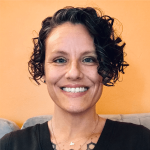 Jeanne Holverstott, MS, DHSc, is an autism-focused clinician, researcher, and founder of Autistically Allied, a private practice specializing in adult autism assessment and consultation. She is a doctoral candidate in Health Sciences (Autism Spectrum Disorders concentration) at Bay Path University, where her scholarship examines interpretive labor, healthcare participation, and the Conditional Competence Bind in autistic–nonautistic interaction. Her work translates lived experience into clinically usable frameworks for providers, families, and autistic adults. She writes and presents on neurodiversity-affirming care, communication, and systems design, and develops practical tools that help professionals align everyday practice with ethical, participatory autism care across the lifespan settings.
Blue Envelope Program Supports Autistic Drivers
The Blue Envelope Program, an initiative designed to improve communication between autistic drivers and law enforcement officers, has been adopted...
OAR Welcomes New Hire Autism Navigators
Along with the spring sunshine, OAR’s Hire Autism Program warmly welcomed seven new talented navigators. Congratulations to Jenine B., Cristian...
Social-Emotional Development and Communication for Young Children
In October 2025, OAR’s Board of Directors authorized funding for eight applied autism research grants. These new research grants, totaling...