Breaking the Silence: Confronting Autism Stigma in Schools
November 05, 2025
By: Halle Guber
Categories: Self-Advocates, Education


“You don’t look autistic.”
I was in middle school when those words were first spoken to me, delivered with a smile as if they were the highest form of praise. I had just finished presenting on ableism for an “isms” project in my class, sharing my personal connection to the topic by revealing my autism diagnosis. What was meant as encouragement felt like erasure—as if the only way to value me was to deny a fundamental part of who I am.
That moment crystallized something I’d been sensing but couldn’t yet articulate: our schools are filled with well-meaning people who don’t understand autism, and that misunderstanding creates a silence that hurts us all.
The problem starts with perception. When most people think of autism, they picture what they’ve seen in movies and TV shows—the nonverbal characters, the dramatic stimming, the behaviors that make everyone else feel uncomfortable. These representations, while valid experiences for some autistic people, have created a narrow box that the rest of us supposedly don’t fit into.
As a high-functioning autistic student, I’ve learned that this misconception isn’t just frustrating—it’s harmful. When educators and peers can’t recognize autism beyond stereotypes, they miss the real struggles that many of us face daily: the student who seems “fine” but melts down from sensory overload, or the teenager who masks so well that their exhaustion goes unnoticed.
School hallways buzz with assumptions. Teachers whisper about which students are “really” disabled and which ones are just making excuses. Peers mock accommodations they don’t understand. And somewhere in the middle, autistic students learn to hide, to minimize, to make themselves smaller to fit into spaces that weren’t designed for minds like ours.
I’ve witnessed this silence firsthand—not just in my own experience, but in conversations with other students navigating IEPs and 504 plans. Too many of them don’t even understand their own rights or what services they’re entitled to receive. They’ve somehow gotten the message that needing help makes them burdens, that being different makes them less worthy of respect and accommodation.
It wasn’t until high school that I found the courage to challenge these assumptions directly. What started as personal advocacy grew into something larger when I realized how many voices were going unheard. Through conversations with teachers, administrators, and fellow students, I began to see the gaps in understanding that create barriers for all of us.
The most powerful moments haven’t been in formal presentations or meetings, but in quiet conversations with students who didn’t know they could speak up for themselves (or how to), in helping a peer understand what their IEP actually said, and in watching a teacher’s perspective shift when they finally understood why certain accommodations matter.
Real change requires more than individual success stories—it requires widespread understanding. Schools need to move beyond seeing autism as either a tragedy to be overcome or an inspiration to be celebrated. We need educators who understand that autism is a neurological difference that affects how we process the world, not a character flaw or a superpower.
This means training that goes deeper than surface-level awareness. It means creating environments where stimming isn’t seen as disruptive behavior to be stopped, but as a way of staying regulated that should be accommodated. It means understanding that a student who can’t make eye contact isn’t being disrespectful. They’re simply communicating in their own way.
The silence around autism in schools isn’t just about ignorance—it’s about fear. Fear of saying the wrong thing, of not knowing how to help, of confronting our own biases about what “normal” looks like. But silence never solved anything. And it never will.
We need brave conversations. We need autistic voices in the rooms where decisions are made about us. We need to challenge the assumption that there’s a right way and a wrong way to exist in educational spaces or any space for that matter.
Most importantly, we need to recognize that when we create schools that truly work for autistic students, we create schools that work better for everyone. The next time someone tells an autistic student they “don’t look autistic,” I hope that student has the tools and confidence to respond with, “This is exactly what autism looks like.”
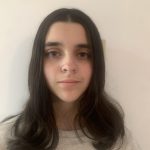 Halle is a high school student passionate about educational advocacy and autism awareness. She works directly with teachers, administrators, and fellow students to improve understanding of neurodiversity in school settings. Halle has spoken with dozens of staff members about navigating the education system as an autistic student and regularly helps peers understand their IEP rights and accommodations. She is currently working to establish a mentorship program connecting autistic youth with adults in her community. Outside of school, Halle enjoys writing and hopes to continue amplifying underrepresented voices through her work.
Find Your Crowd: Building Real Friendships Through Authenticity
I have collected Pokémon cards since I was about five years old. It felt like the most natural thing in the...
Culturally Adapted Approaches to Supporting Arabic-Speaking Individuals with Autism
When we talk about supporting autistic individuals, we often rely on models and strategies developed in cultural contexts very different...
Additional IDEA Funding Available to States
In mid-May, the U.S. Department of Education announced that it will provide an additional $144 million to states and districts to use for Individuals with...